

 上傳3D模型
 上傳SU模型
 合成全景
合成全景九女峰 · 故鄉(xiāng)的云山奢酒店 | gad · line+ studio
泰山九女峰山脈腳下的東西門(mén)村依山間溪流展開(kāi),相傳立村于清朝康熙年間。小鄉(xiāng)村在此默默延續(xù)了幾百年,直至原住民背井離鄉(xiāng),留下村落在山中漸漸衰敗。2019年,魯商集團(tuán)在此試點(diǎn)鄉(xiāng)村振興,引入樸宿品牌想將破敗的村落盤(pán)活為高端酒店。我們受此委托,懷著對(duì)原始場(chǎng)地的尊重,希望保留百年間人與自然互動(dòng)的空間記憶,用盡量少的設(shè)計(jì)手法和材料介入讓場(chǎng)地本身的氣質(zhì)自然顯露,給逃離喧囂的人們制造質(zhì)樸而舒適的休憩空間。
Dongximen Village, established in the Qing Dynasty, is at the foot of the range of Mount Tai. This small village grew silently for hundreds of years, until the villagers left and then gradually declined. In 2019, LuShang Group introduced the Pusu Inn here in an attempt to activate the village as a high-end resort. During the design process, with respect for the original site, we use as little design techniques and materials as possible to naturally reveal the temperament of the site itself.
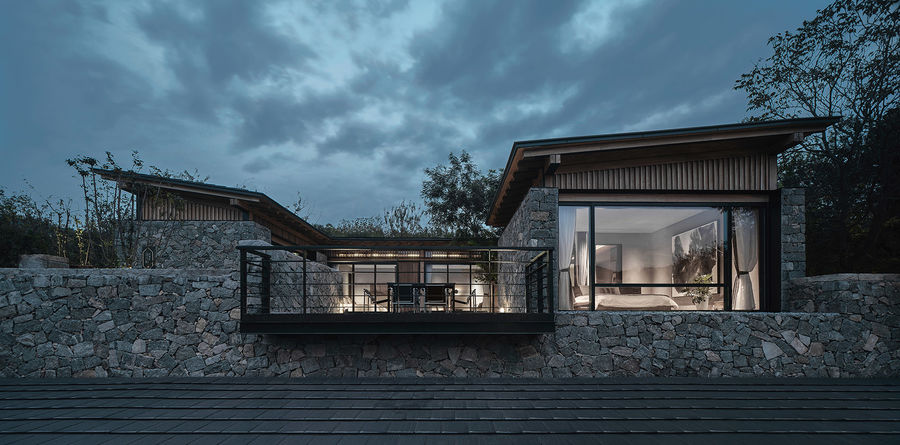
▼項(xiàng)目外觀(guān)概覽,overall of the exterior appearance ?章魚(yú)見(jiàn)筑
記憶的保留
Retain the Memories
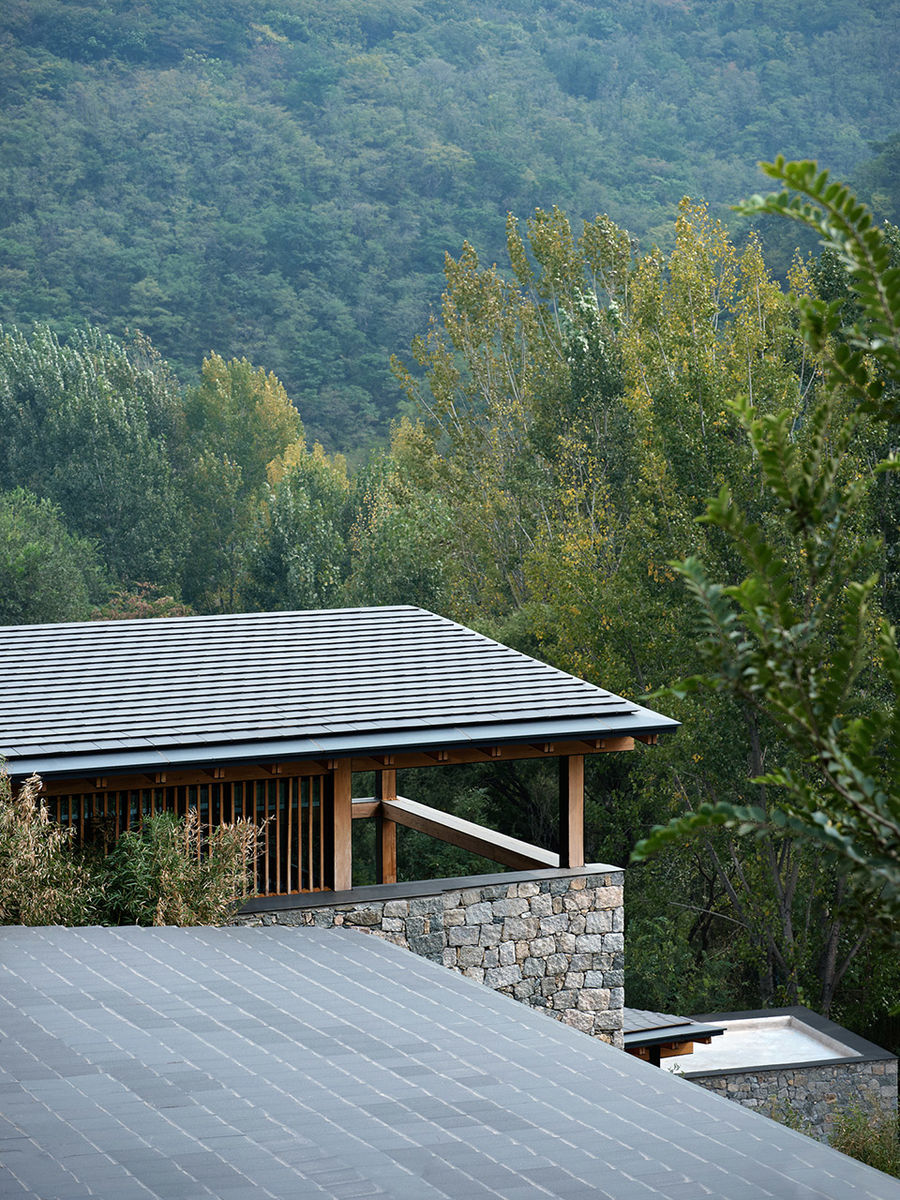
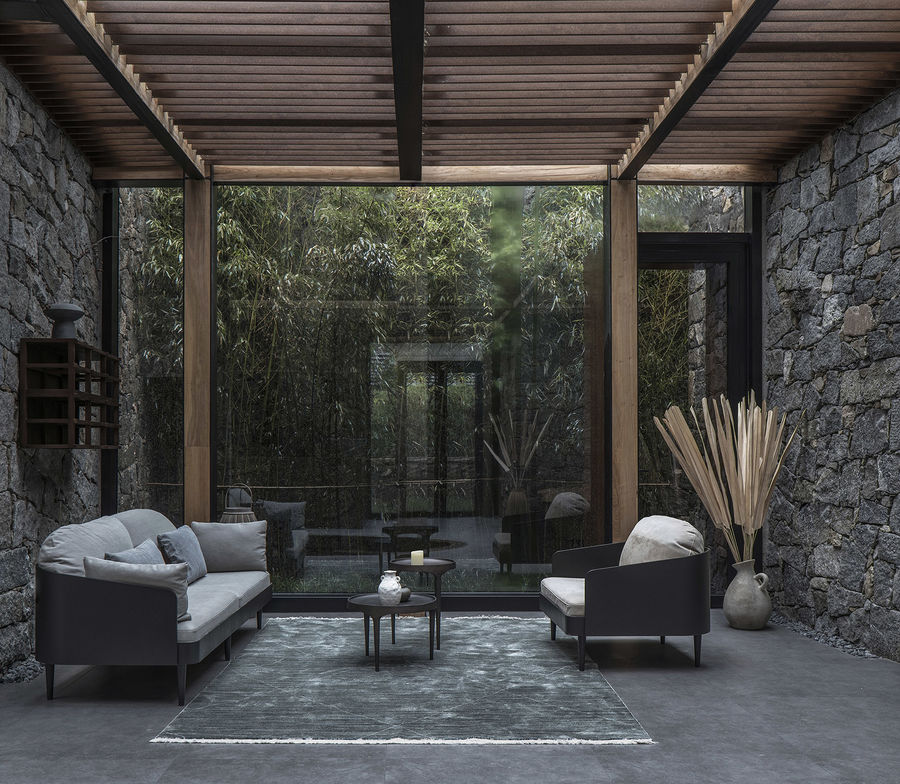
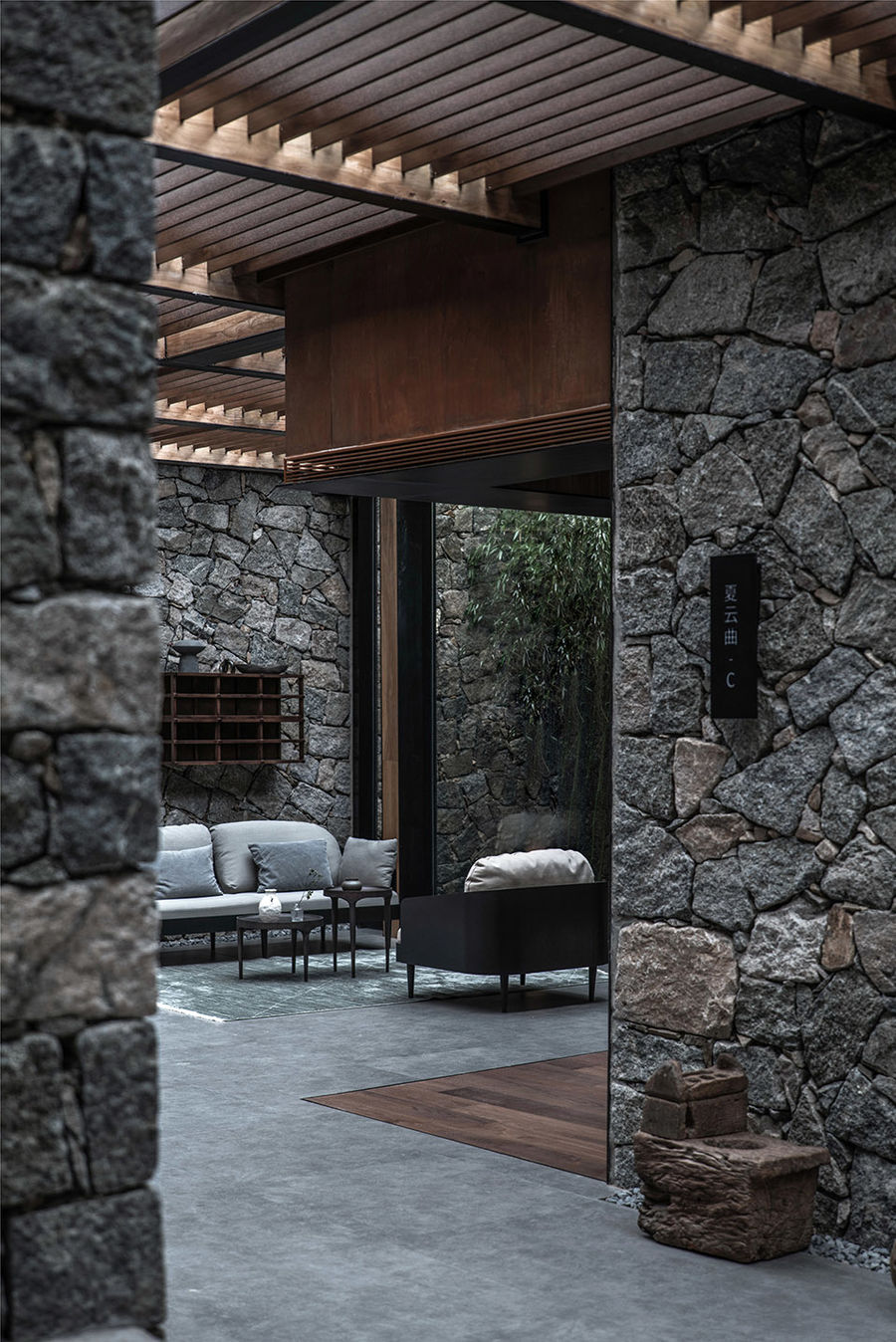
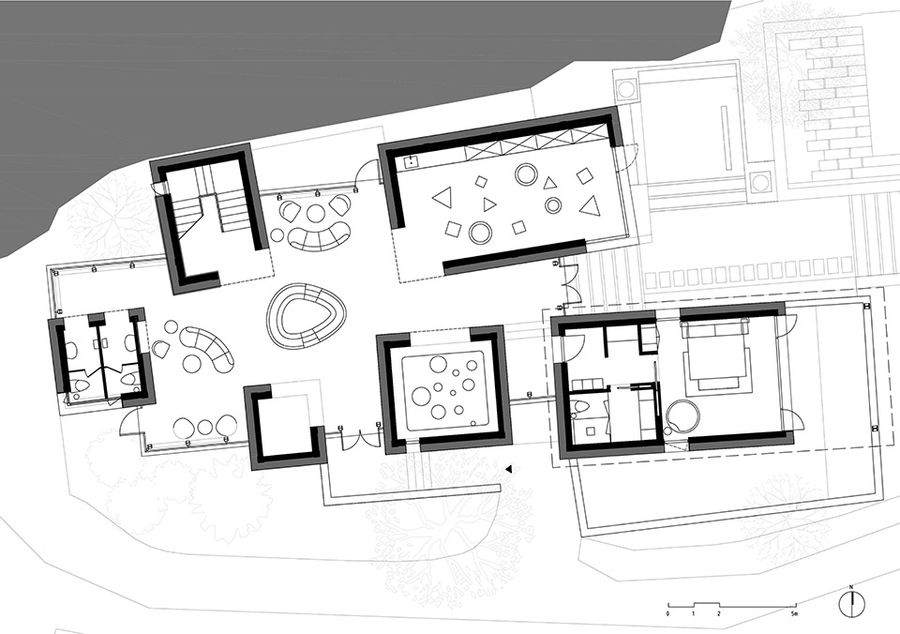
山地的西南角錯(cuò)落地分布著四個(gè)由毛石堆砌而成的雜物房。這四個(gè)方形體塊之間所形成的空間關(guān)系是村民生活和自然山體不斷對(duì)話(huà)的結(jié)果。我們對(duì)這幾個(gè)早已破敗的雜物房進(jìn)行了原址修復(fù),在頂面和墻面采用玻璃封閉空間以形成日光中庭,最大程度保留原始的場(chǎng)地肌理的同時(shí)強(qiáng)調(diào)了建筑的體積感。傳統(tǒng)定義的內(nèi)立面外立面在此不復(fù)存在,中庭空間所擁有的是戶(hù)外的場(chǎng)所感。同時(shí),玻璃的工業(yè)感則突出了毛石的質(zhì)樸粗礦和蘊(yùn)藏其間石匠工人的傳統(tǒng)手藝。
In the southwest corner, there were four utility rubble rooms. The relationship between them was the result of continuous change between the villagers’ life and the natural mountain. We renovated these long run-down rooms on the original scope, and establish a sunlight atrium by the glass roof to preserve the site texture and emphasize the building volume. There is no traditionally defined internal and external fa?ade, and the atrium is also the outdoor activity space. At the same time, the industrial glass and traditional handmade rubble complement each other.
▼保留原始的場(chǎng)地肌理的同時(shí)強(qiáng)調(diào)了建筑的體積感,preserve the site texture and emphasize the building volume ?章魚(yú)見(jiàn)筑
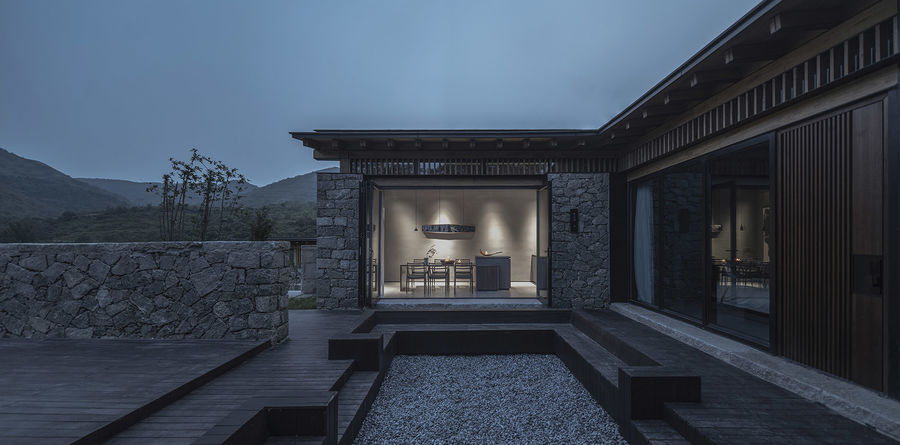
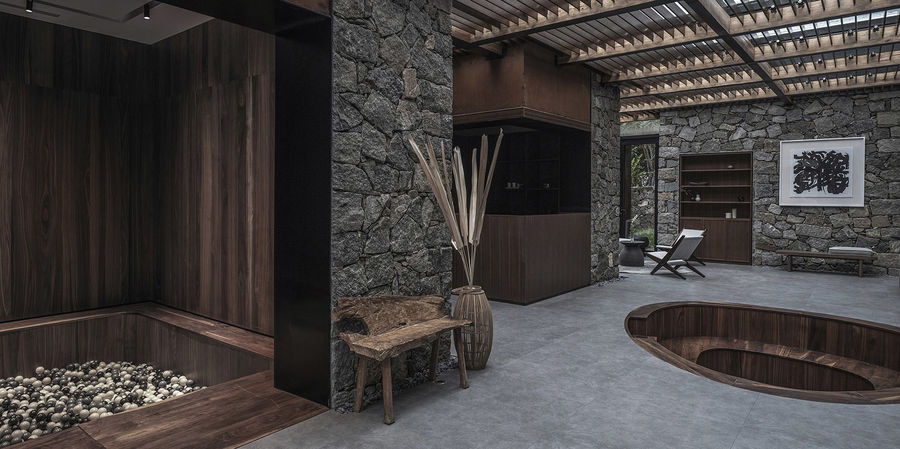
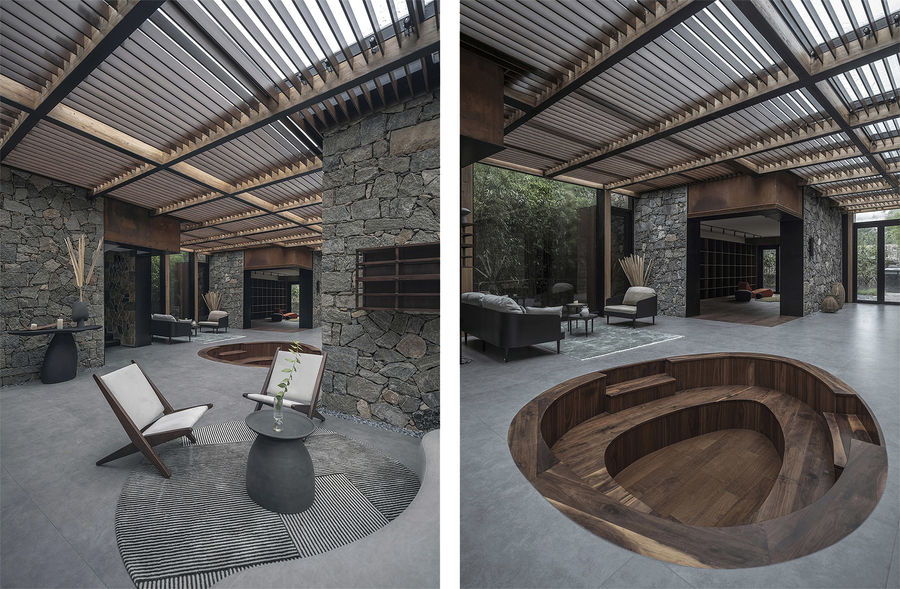
每個(gè)體塊在角部打開(kāi),通過(guò)耐候鋼板和黑色鋼板的組合將開(kāi)口凸顯。接待、兒童活動(dòng)室、泡泡池、樓梯等功能由此融入整個(gè)中庭。建筑體塊的獨(dú)立性和內(nèi)部空間的完整性這對(duì)矛盾在此得到了完美的解決。場(chǎng)地中央原本留存的坑洞被改造成臺(tái)階式的下沉庭院,為中庭增添靈動(dòng)的同時(shí)形成向心性。體塊之間自然圍合出穩(wěn)定的區(qū)域,外部景觀(guān)則透過(guò)玻璃蔓延進(jìn)來(lái),此間設(shè)置沙發(fā),供茶歇休憩。修繕后的石頭盒子將一直默默承載著村落的記憶,與在內(nèi)嬉戲玩耍的孩子們一起,將時(shí)間延續(xù)。Each volume is opened at a corner, and the opening is highlighted by the weather-resistant steel plate and black steel plate. The reception, children’s activity room, bubble pool and stairs are led into the atrium. The independence of the building block and the integrity of the internal space are simultaneously reflected. The original pothole in the center of the site was renovated into a stepped sunken courtyard, making it flexible and stable. And set a sofa there for the visitors to enjoy the natural view from the generous glass. The renovated stone houses with changing functions will always silently carry the memory of the village.
▼臺(tái)階式的下沉庭院,stepped sunken courtyard ?潘杰
傳統(tǒng)的更新
Renew the Traditions
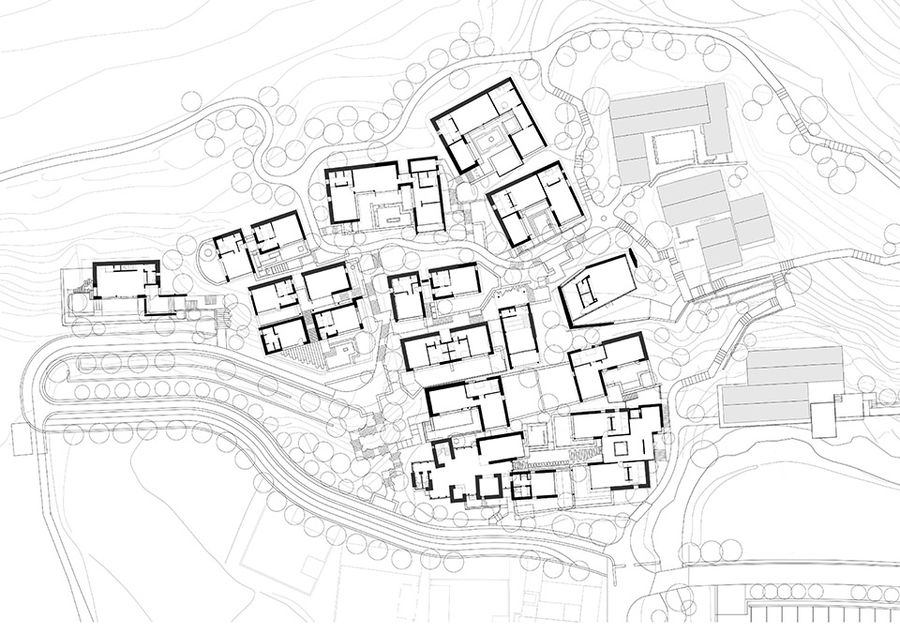
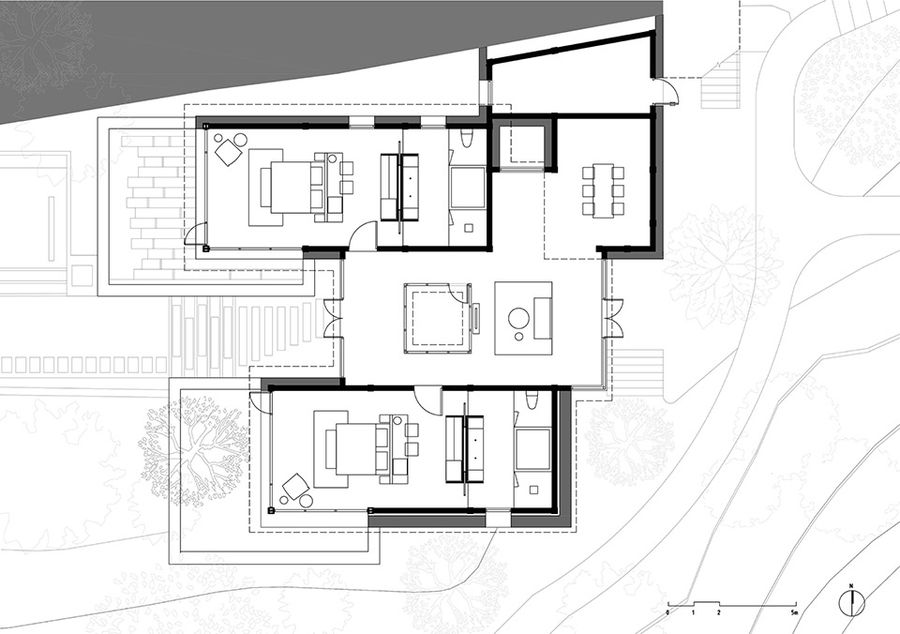
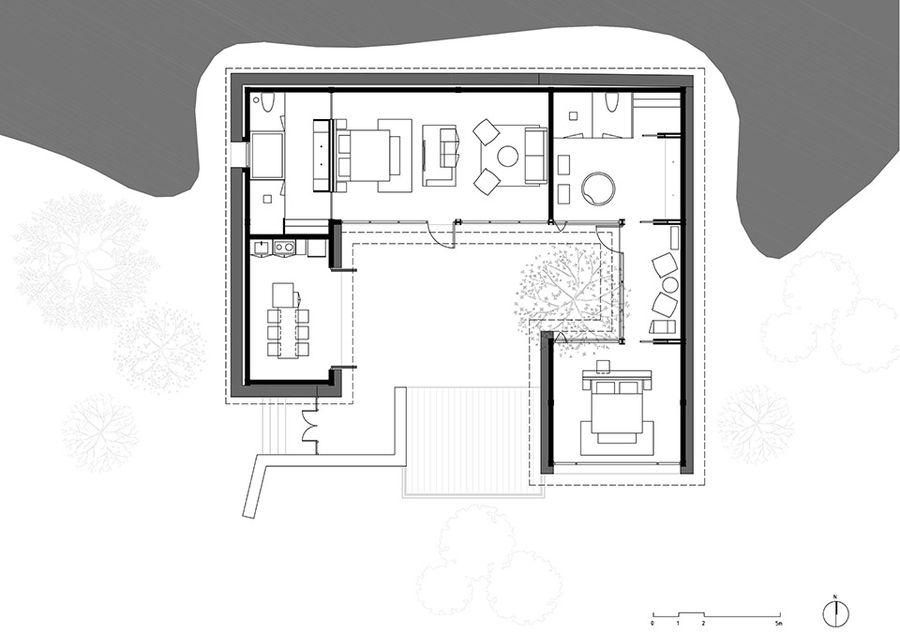
村落的民居院落多分布在山坡陡地,以L(fǎng)型院與三合院為主。原住民早已搬離而房屋則呈衰敗之勢(shì)。但即使殘破,院落和自然山體所呈現(xiàn)的高度融合依舊保存著曾經(jīng)的生活記憶。我們的客房即從這些原始院落脫胎而來(lái)。
The residential courtyards of the village are mostly distributed on steep hillsides, mainly L-shaped courtyards and three-section compounds with natural resources and old life memory. All the guest rooms are born out of these declining courtyards.
▼分析圖,diagram ? gad · line+ studio
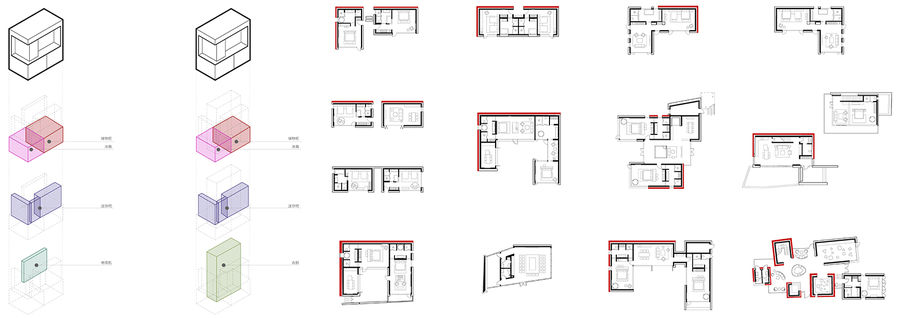
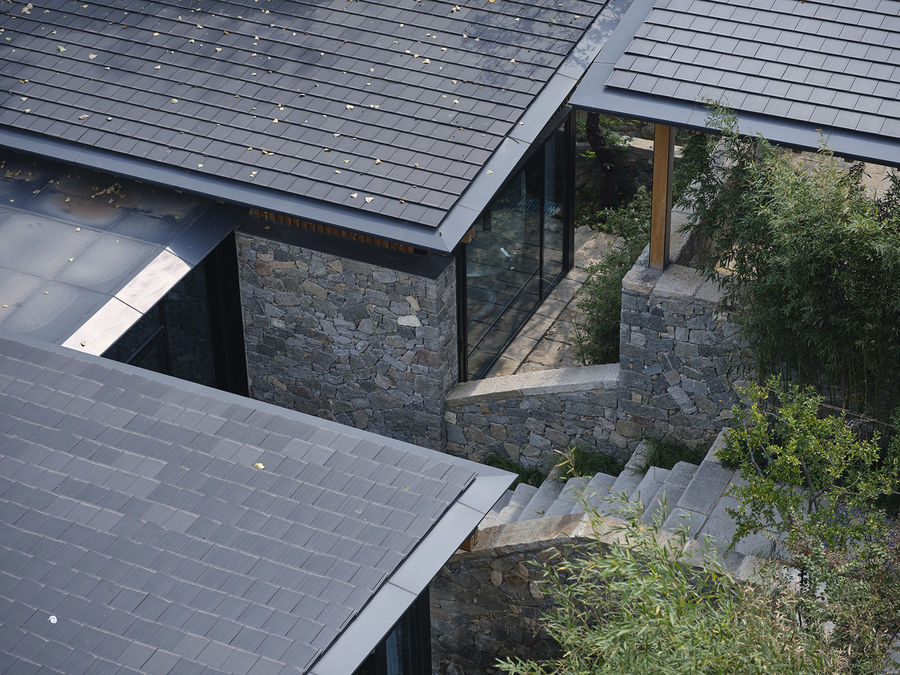
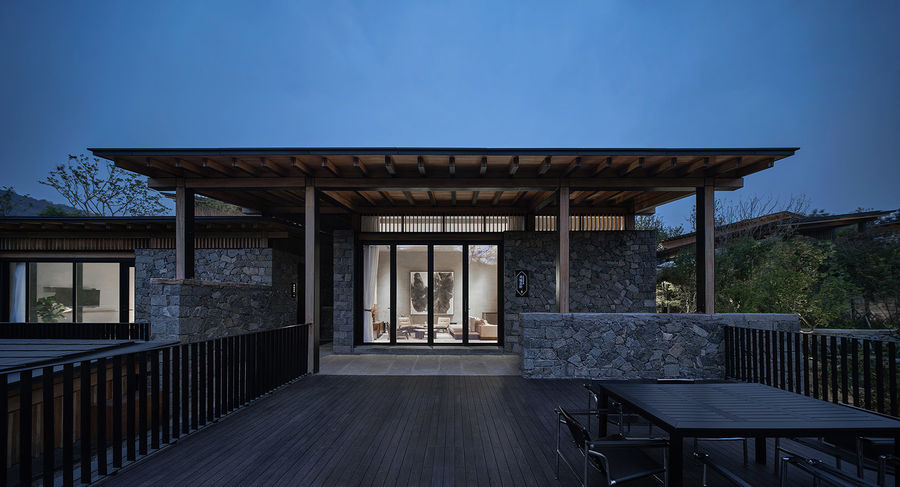
我們保留老院落的原始肌理及空間關(guān)系,強(qiáng)化景觀(guān)的導(dǎo)入和內(nèi)院的核心性。以此為基礎(chǔ)進(jìn)行適當(dāng)擴(kuò)建,將客房及公共活動(dòng)的功能以組團(tuán)方式置入。那些保留的毛石墻和重建的毛石墻見(jiàn)證了新與舊的傳承。平面組織和功能排布依據(jù)每個(gè)院子各異的地形高差、方位朝向及最為重要的原始肌理而定制。人們?cè)诖瞬粌H體驗(yàn)高品質(zhì)的度假感受,更能和傳統(tǒng)相通。We retained the original texture and spatial relationship, and strengthened the introduction of the landscape and the centricity of the inner courtyard, based on which, incorporated the functions of guest rooms and public activities in groups. Those preserved rubble walls and reconstructed rubble walls have witnessed the heritage of the new and the old. Operating the floor plan, functions, terrain and orientation, make every building out of the ordinary. Visitors can not only enjoy high-quality vacation experience here, but also communicate with traditions.
▼毛石墻見(jiàn)證了新與舊的傳承,reconstructed rubble walls have witnessed the heritage of the new and the old
化繁為簡(jiǎn)–空間處理手法
Less is More – Space Processing Techniques
純粹的幾何形體去除刻意的裝飾和造型,使空間回歸本源,為從城市的嘈雜中脫身的人們帶來(lái)片刻寧?kù)o。The pure geometric shape removes the deliberate decoration and modeling, restores the original state of the space, and brings a moment of tranquility to people.
▼純粹的幾何形體去除刻意的裝飾和造型,pure geometric shape removes the deliberate decoration and modeling ?潘杰
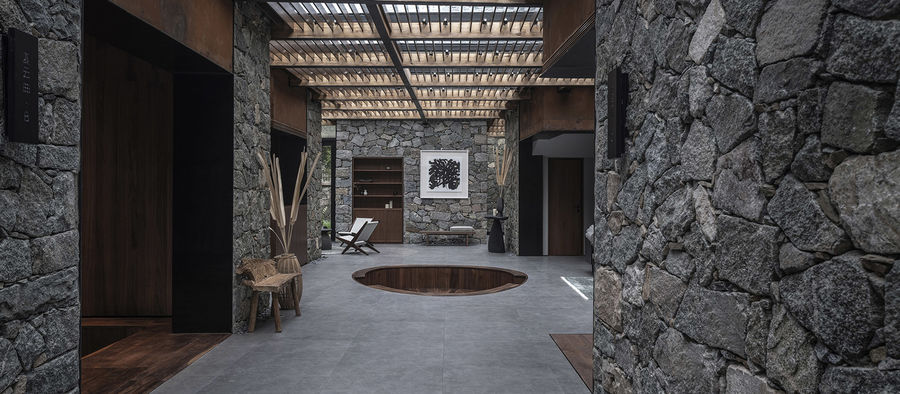
▼毛石承載著場(chǎng)所的故事,The rubble stone carries the story of the place
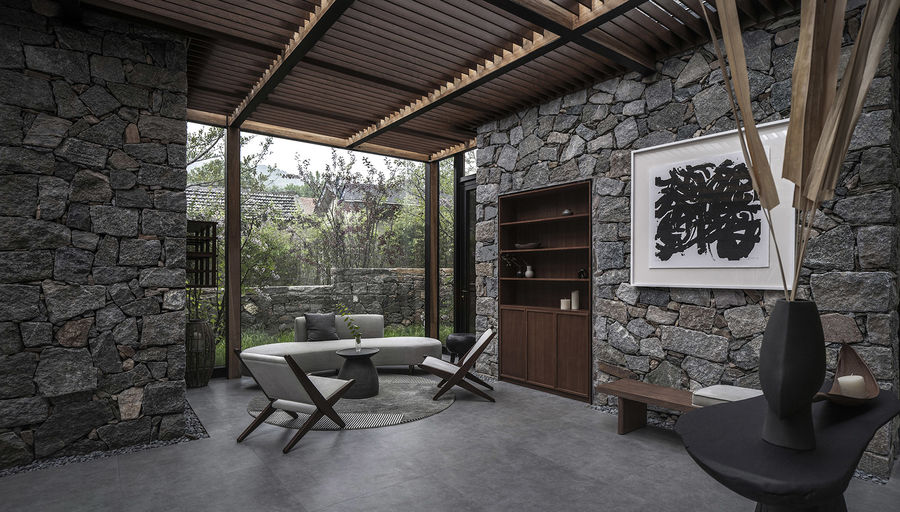
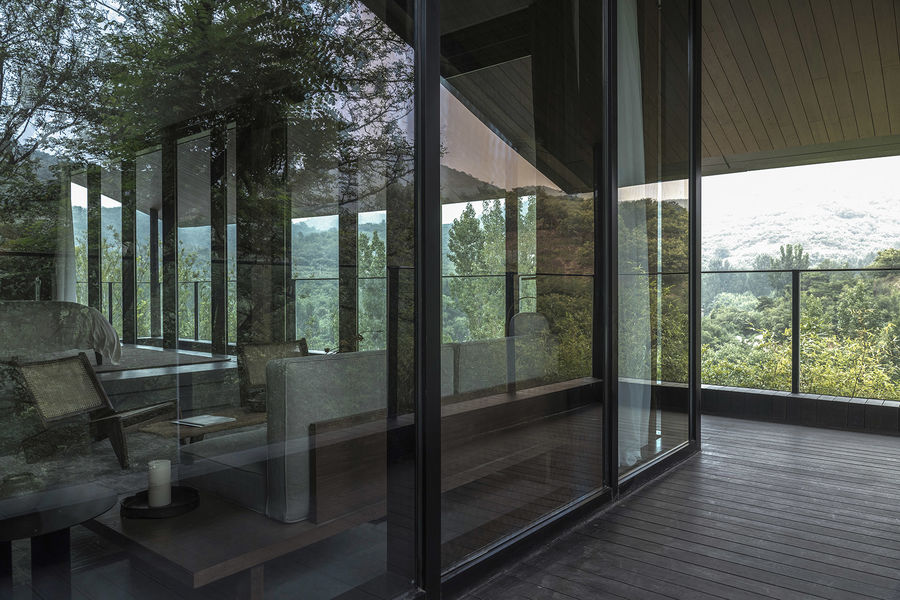
▼露臺(tái)的灰空間增加了層次感,提供了親近自然的可能性,terrace allows the visitors to get closer to nature
隱入山林–景觀(guān)的導(dǎo)入
Hide in the Mountains – The Introduction of Landscape
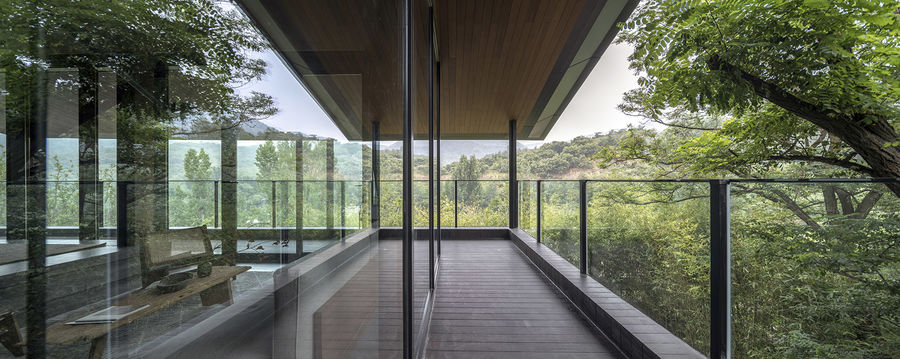
人們逃離出都市的鋼筋水泥,只為在不經(jīng)修飾的景觀(guān)中感受原始的自然。泰山山脈所蘊(yùn)含的自然之美和村落原生態(tài)形成的院落空間是我們要引入整個(gè)居住體驗(yàn)的核心。在保留原有毛石立面的基礎(chǔ)上,我們引入鋼結(jié)構(gòu)體系為大面開(kāi)窗提供可能,以此打破內(nèi)外的邊界,最大程度地將自然置入空間,將空間融入自然。Escape from the urban reinforced concrete, just to feel the primitive nature. The natural beauty and the original courtyard space are the core of the entire living experience. With the existing rubble fa?ade, the steel structure system makes it possible for the panoramic views and renders the demarcation between inside/outside ambiguous.
▼大面開(kāi)窗打破內(nèi)外的邊界,panoramic views and renders the demarcation between inside/outside ambiguous ?潘杰

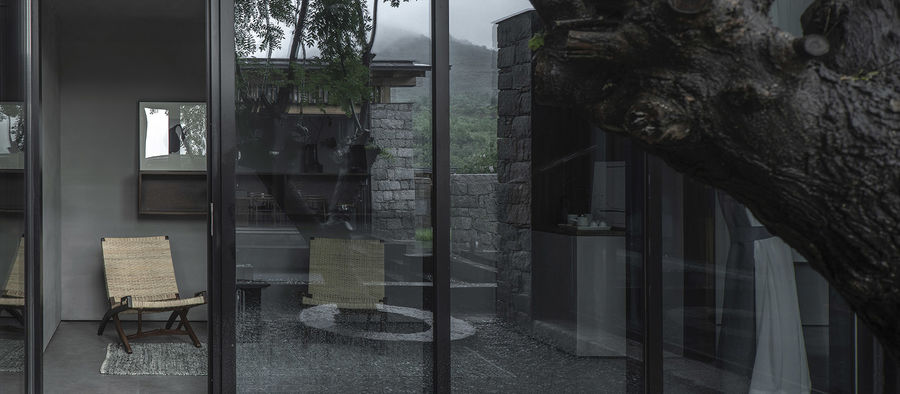
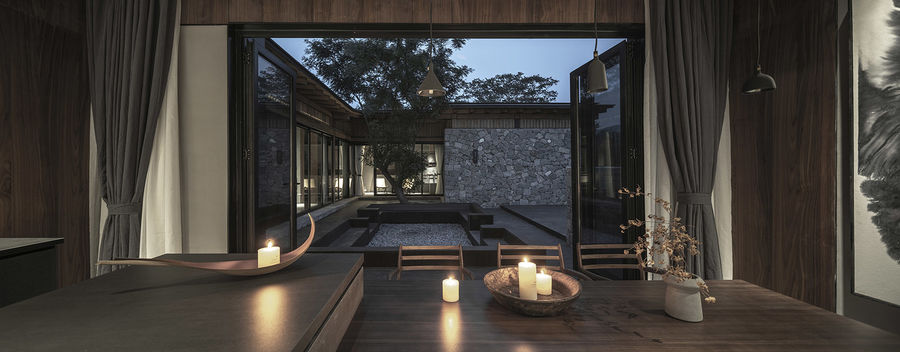
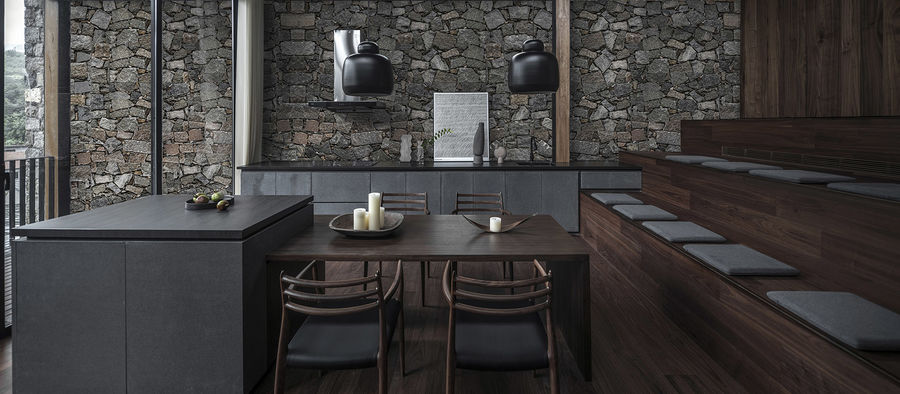
原始的單坡屋頂通過(guò)幾何形體的置入形成兩個(gè)部分,平頂部分消解局部層高形成富有安全感的穩(wěn)定區(qū)域,消解高差所形成的空腔正好用于隱藏空調(diào)等設(shè)備,以保證內(nèi)界面的純凈;對(duì)應(yīng)位于動(dòng)線(xiàn)上的頂面則保留斜頂?shù)男问健烧咚纬傻捏w塊穿插關(guān)系經(jīng)過(guò)材料的強(qiáng)化后,暗示出動(dòng)靜而保證空間的統(tǒng)一性。The original slope roof is separated two parts by the geometric shape. The flat roof dissolves the height difference to form a stable area and hide equipment to ensure the purity. And the roof above the passage is sloping. The two parts of the ceiling are made of different materials, which also implies dynamic and static.
▼客廳,living room ?潘杰
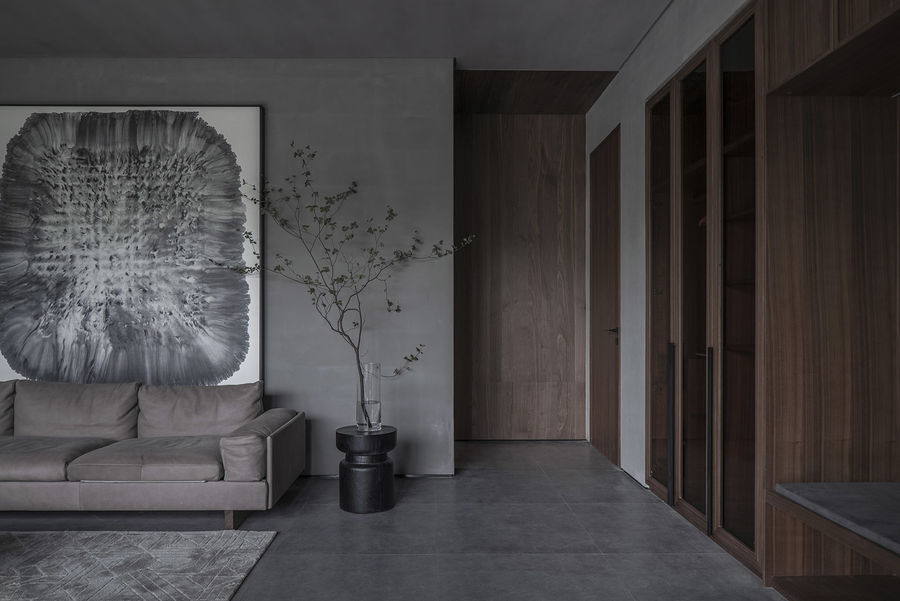
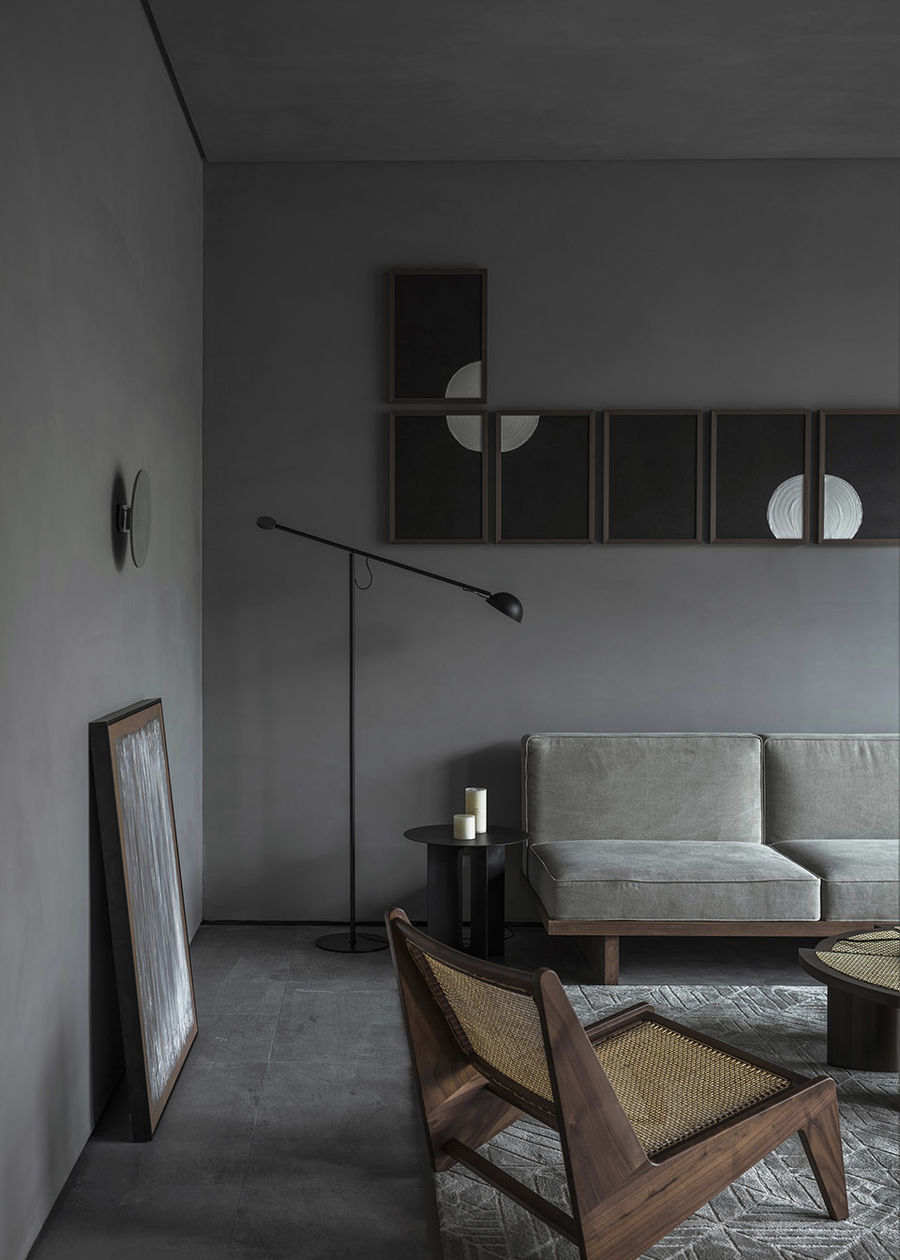
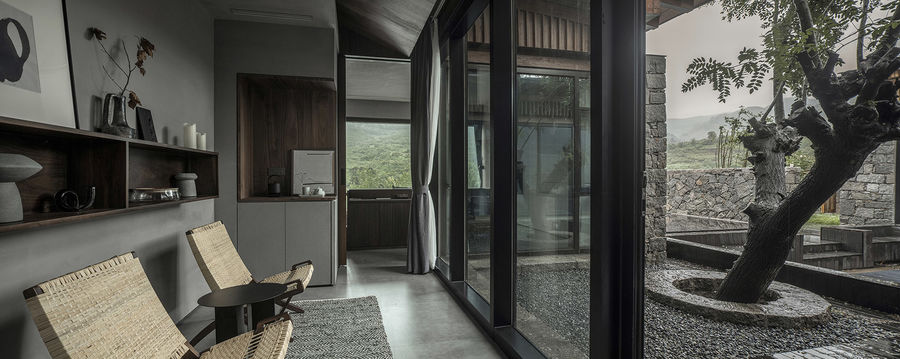
由原始建筑肌理圍合而成的院落空間經(jīng)過(guò)梳理后成為內(nèi)向的空間核心。各個(gè)房間均部分向院落打開(kāi),其中公共客廳的移門(mén)扇可完全開(kāi)啟。此時(shí),內(nèi)外已沒(méi)有邊界,合為整體。我們希望保留院落內(nèi)原有的老榆樹(shù)和建筑的共生關(guān)系,因此將客房平面圍繞此樹(shù)展開(kāi)。臥室、起居衛(wèi)生間形成C型將老樹(shù)包裹其間。傍晚在起居室飲茶片刻,看樹(shù)影橫斜。Each room is partially opened to the courtyard, and the sliding door of the public living room can be fully opened, at which time, the internal and external public spaces have no boundaries and are integrated into a whole. We hope to preserve the symbiotic relationship between the existing old elm tree and the courtyard, so the guest rooms are around this tree. The bedroom, living room and bathroom form a C-shape and wrap the old tree.
▼各個(gè)房間均部分向院落打開(kāi),Each room is partially opened to the courtyard ?潘杰
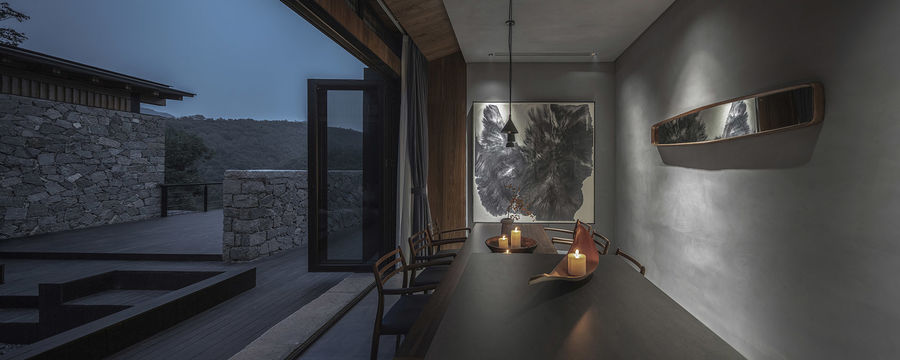
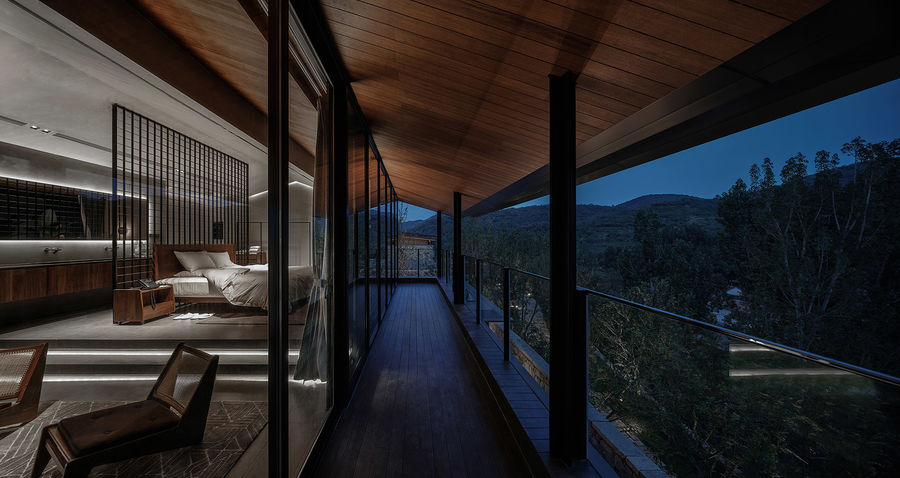
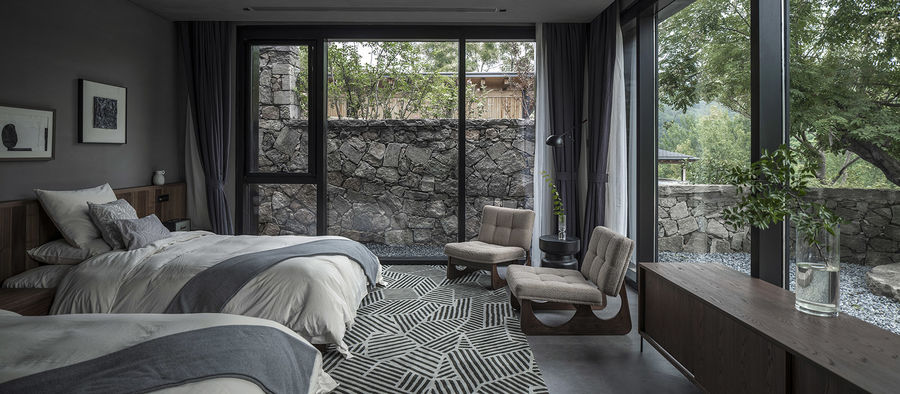
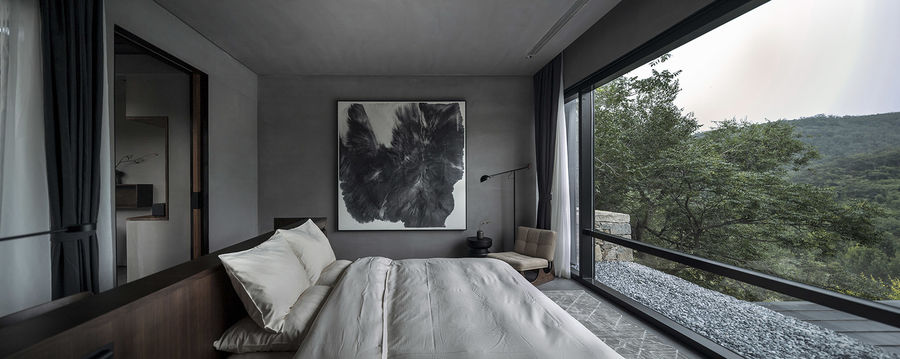
由兩側(cè)的實(shí)墻限定出視覺(jué)通道,將面向山景的景觀(guān)面完全打開(kāi),臥床也面向景觀(guān)面設(shè)置,讓人在蘇醒的第一時(shí)間感受自然,與晨光薄暮融為一體。L形的連續(xù)玻璃界面讓山景完全侵入空間,給人以在自然中入睡的錯(cuò)覺(jué)。露臺(tái)的灰空間增加了層次感的同時(shí)提供了進(jìn)一步親近自然的可能性。The visual passage is defined by the solid walls on both sides, fully opening a landscape view of the mountains. The bed is also set facing the mountain, so that visitors can awake in nature. While maintaining views through the L-shaped glazed fa?ade,make the visitors asleep in nature. And the terrace allows the visitors to get closer to nature.
▼面向山景的景觀(guān)面完全打開(kāi),fully opening a landscape view of the mountains
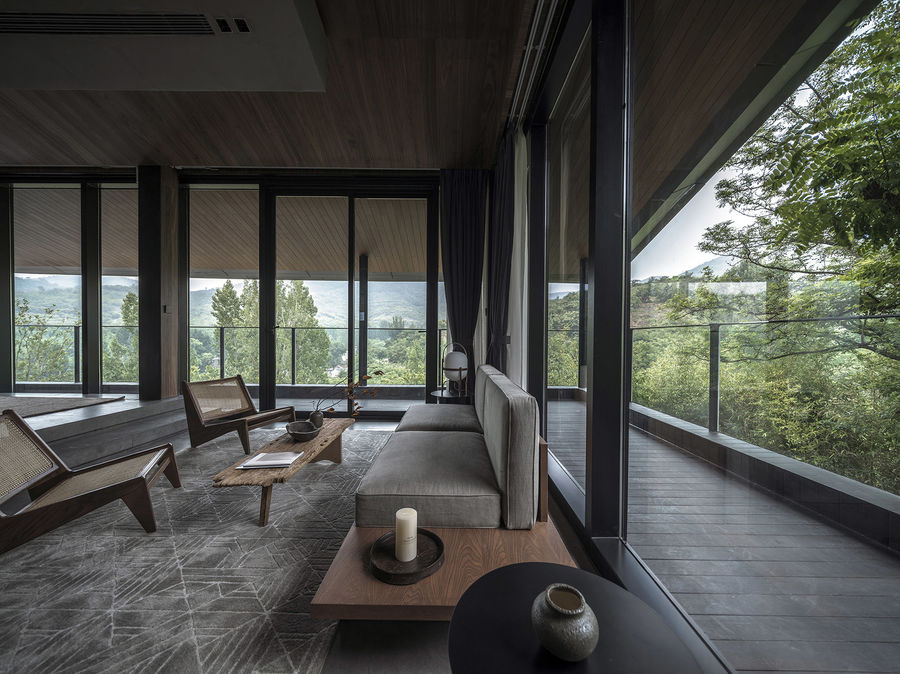
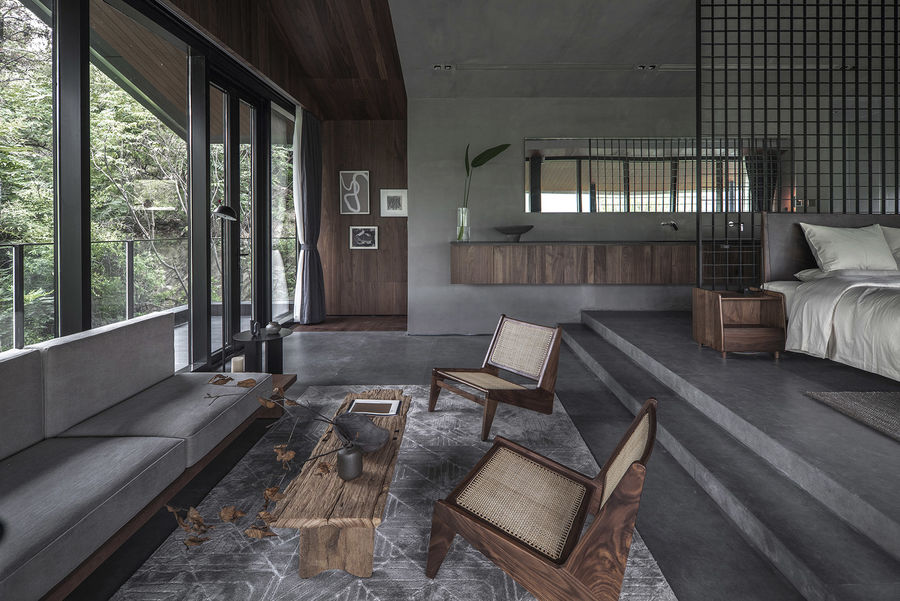
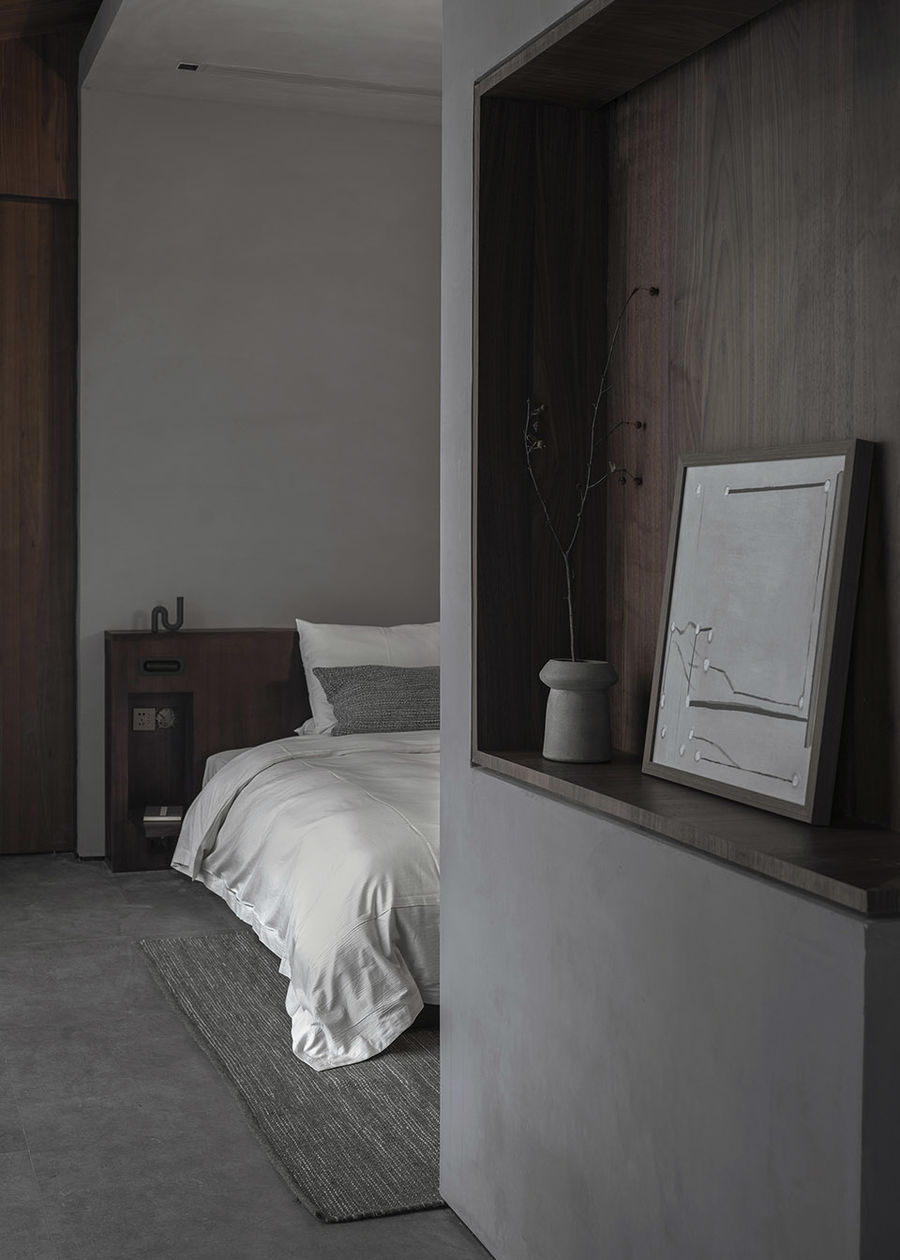
客房必備的功能模塊不再常規(guī)地分散布置在平面中,而是整合成體塊,成為分隔空間的置入物。迷你吧、衣柜、電視柜、玄關(guān)柜被有效組合,分隔出玄關(guān)、起居空間、臥室空間。各個(gè)區(qū)域的領(lǐng)域感得到加強(qiáng)的同時(shí),保證了整體空間的流動(dòng)性并加強(qiáng)了空間的層次感。功能體塊置入對(duì)空間的限定,結(jié)合頂面穿插關(guān)系及材質(zhì)的差異,我們?cè)诳臻g內(nèi)強(qiáng)化出兩條視覺(jué)通道,遠(yuǎn)山近綠躍入眼簾。The necessary functional modules of the guest rooms are no longer regularly scattered in the plan, but integrated into a volume, which can be used to separate the space. The mini bar, wardrobe, TV cabinet and hallway cabinet are effectively combined to separate the hallway, living space and bedroom space. Each area is both independent and interrelated. Combined with the interspersed relationship of the ceiling and the difference in materials, we strengthened two visual channels in the space, allowing the visitors to admire the scenery in the distance and nearby.
▼客房功能整合成體塊,The necessary functional modules of the guest rooms are integrated into a volume ?潘杰
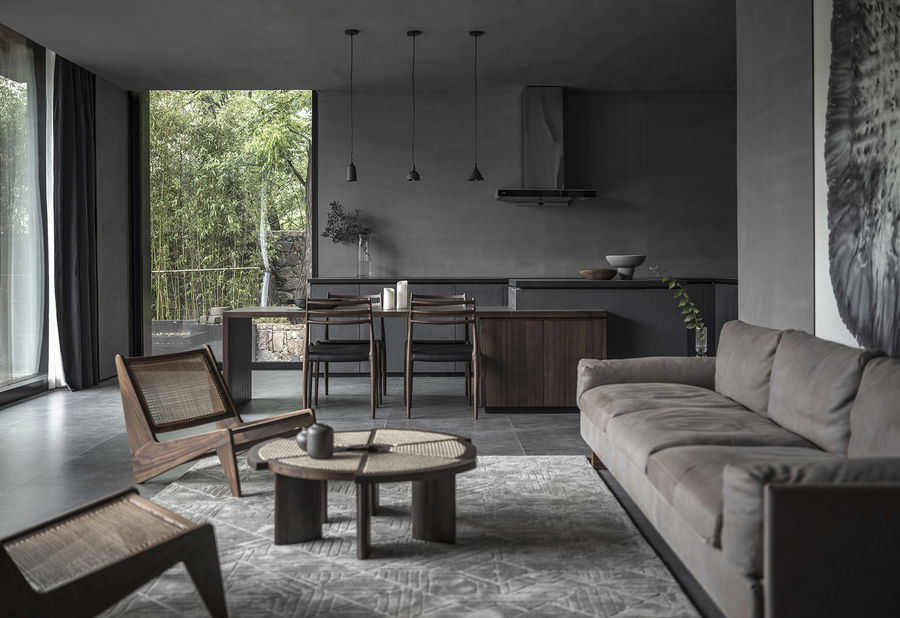
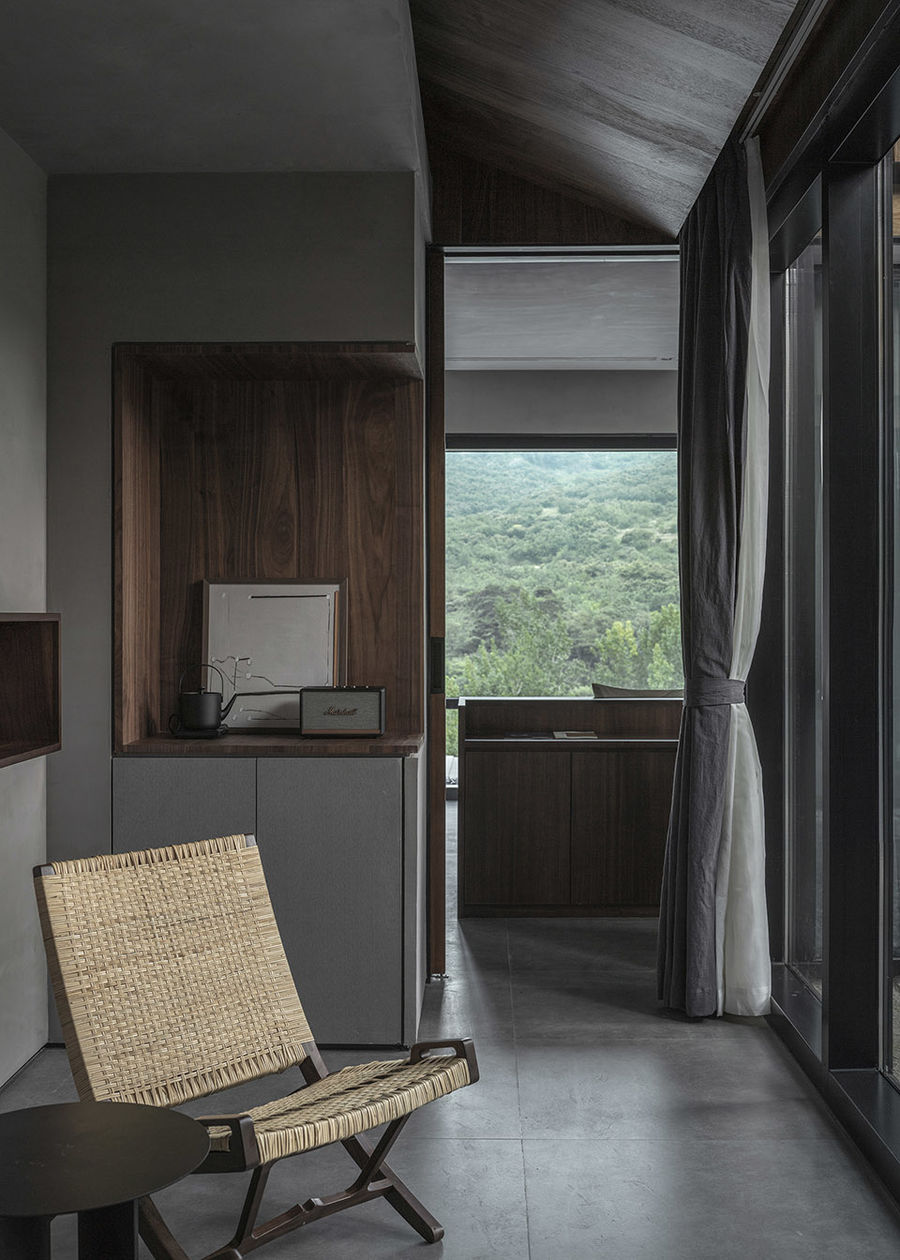
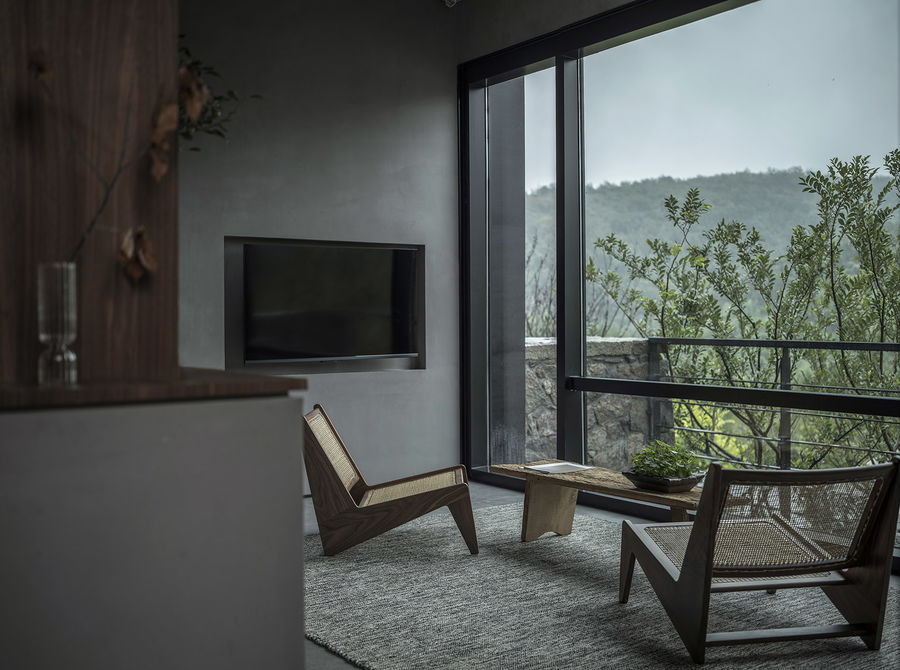
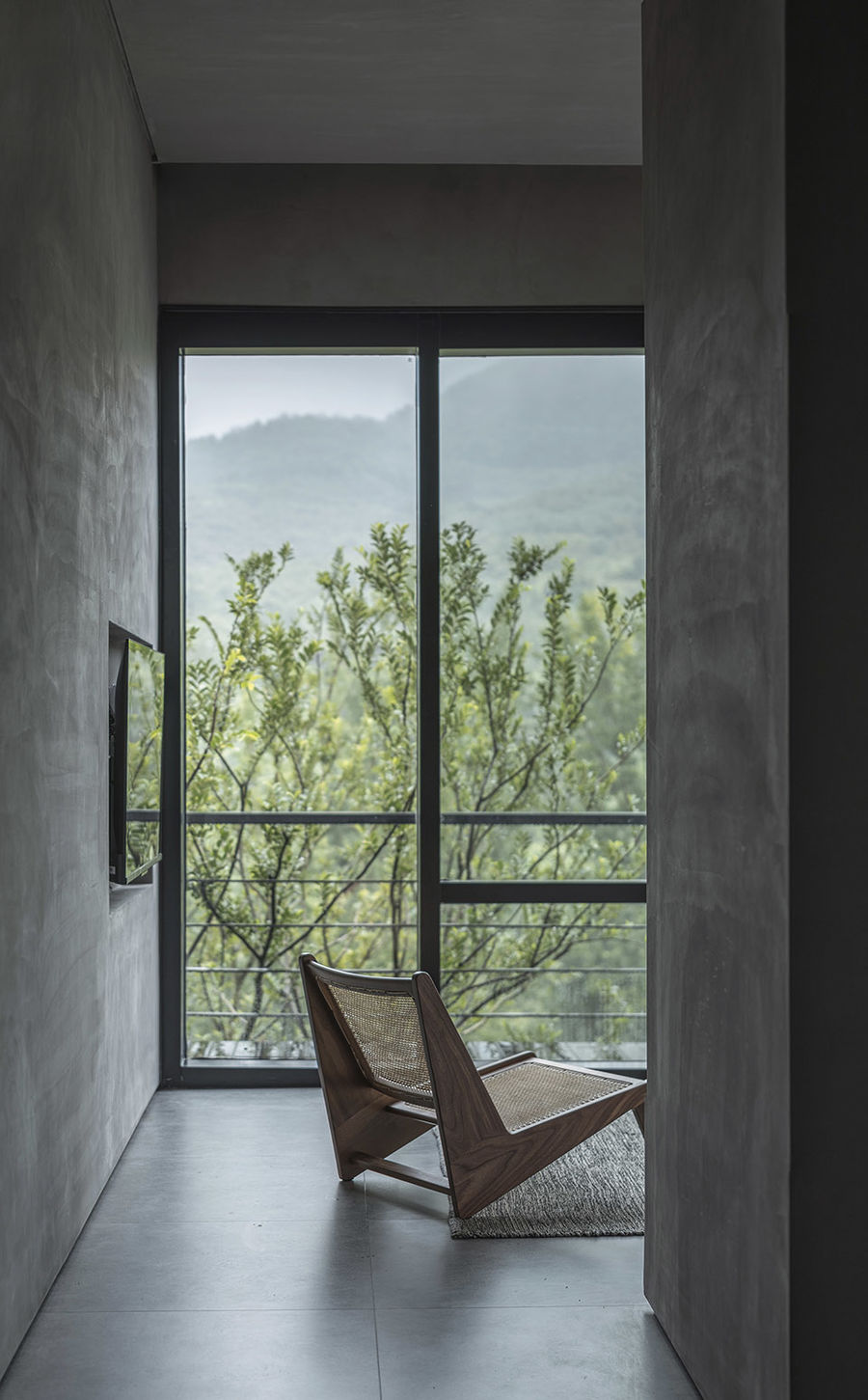
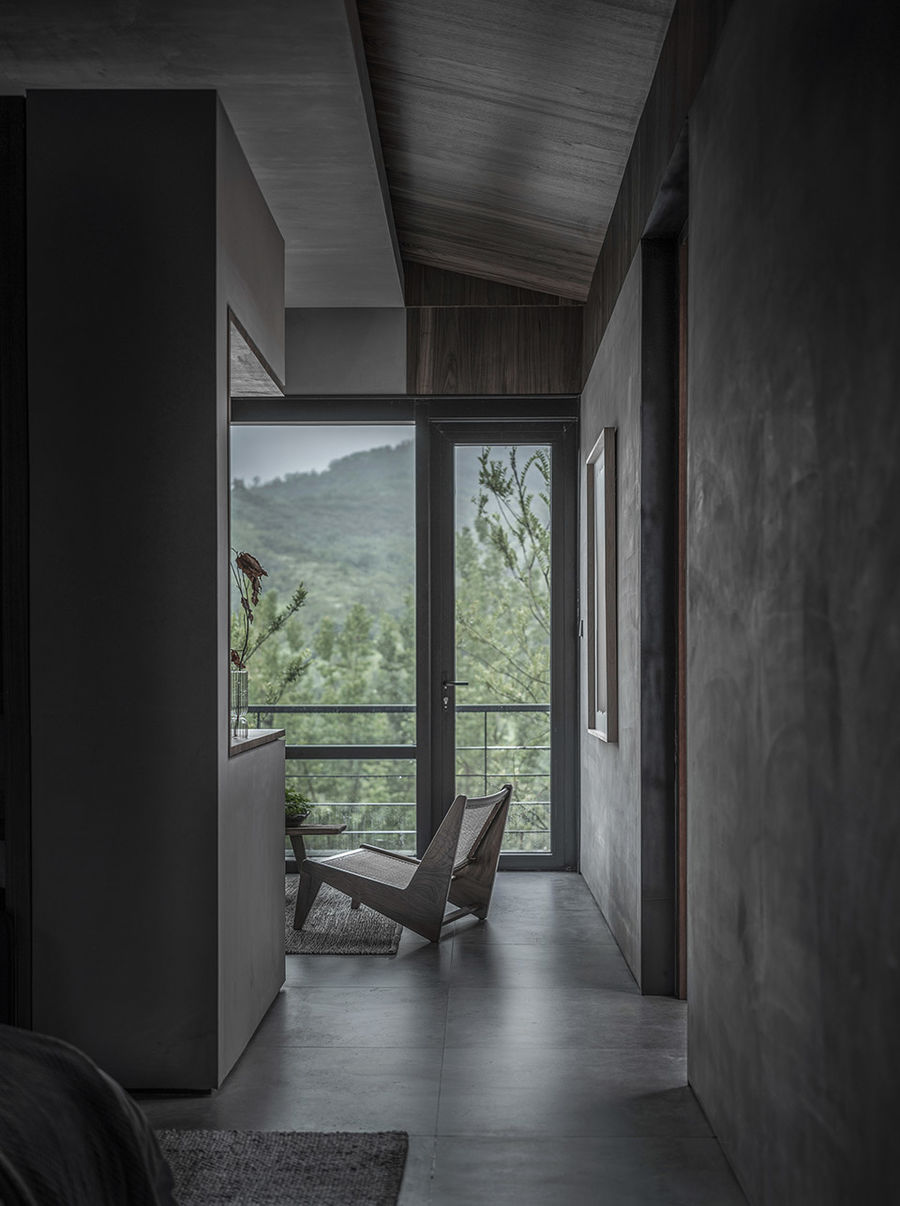
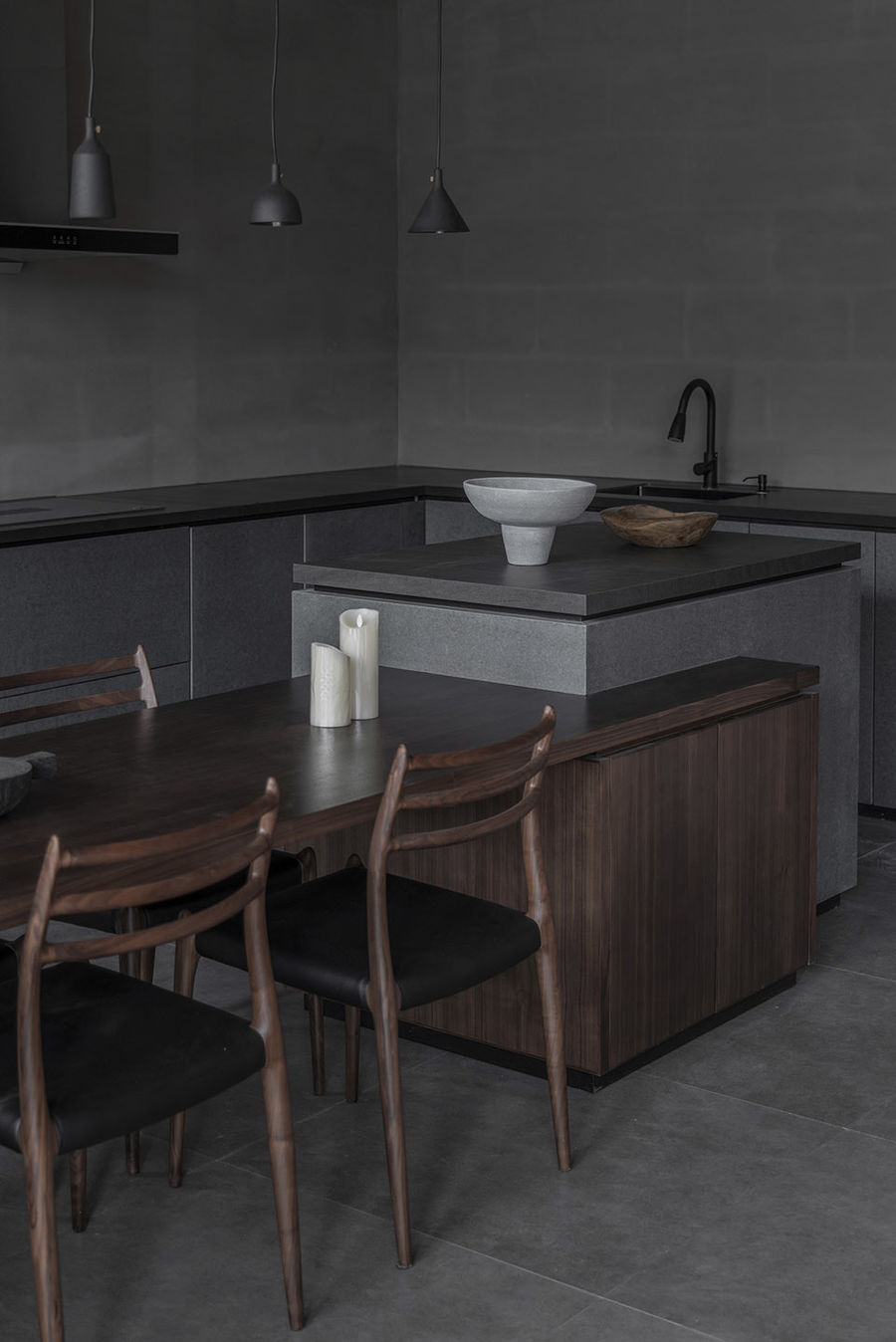
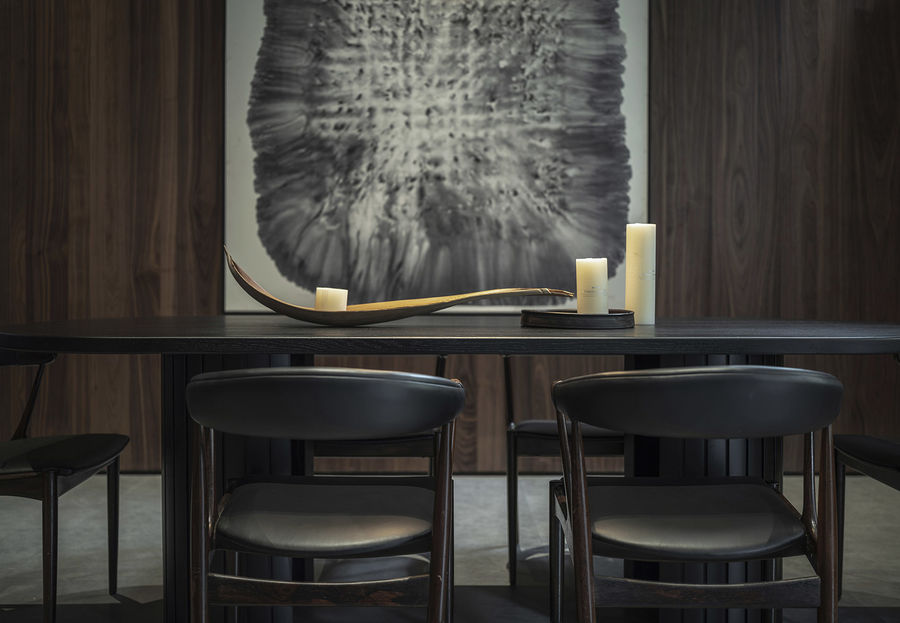
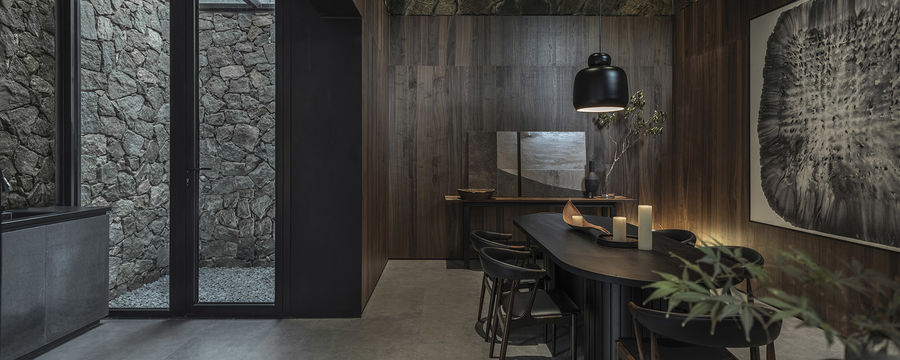
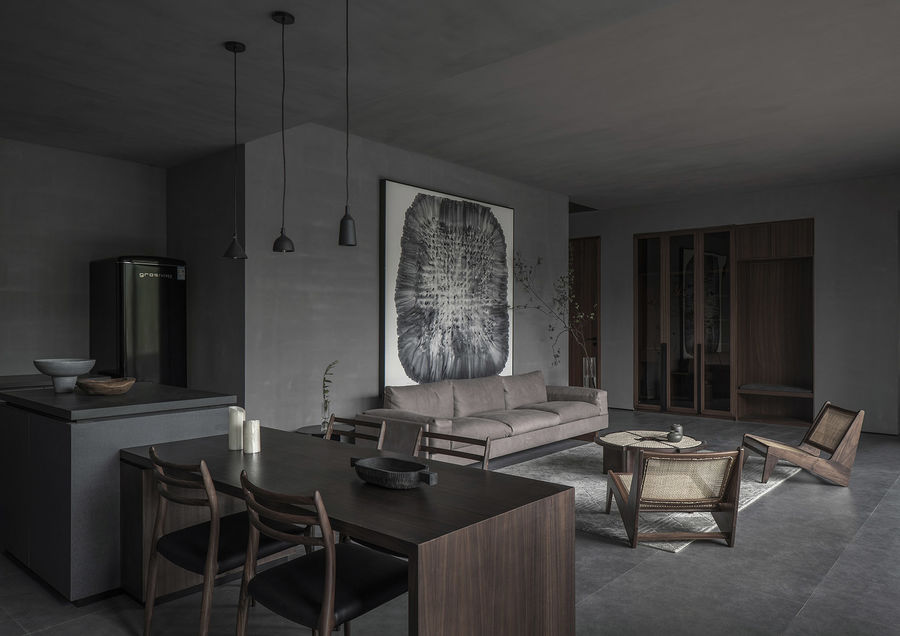
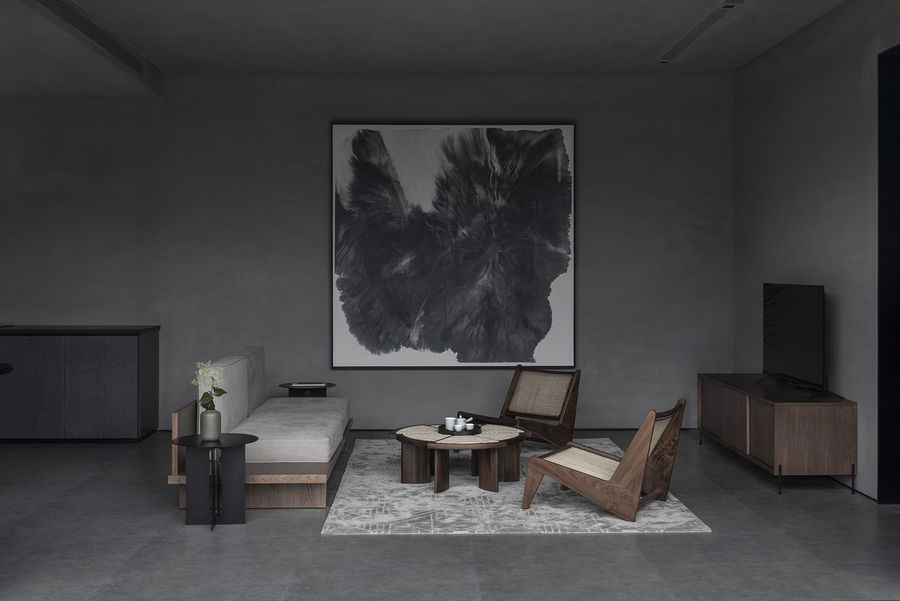
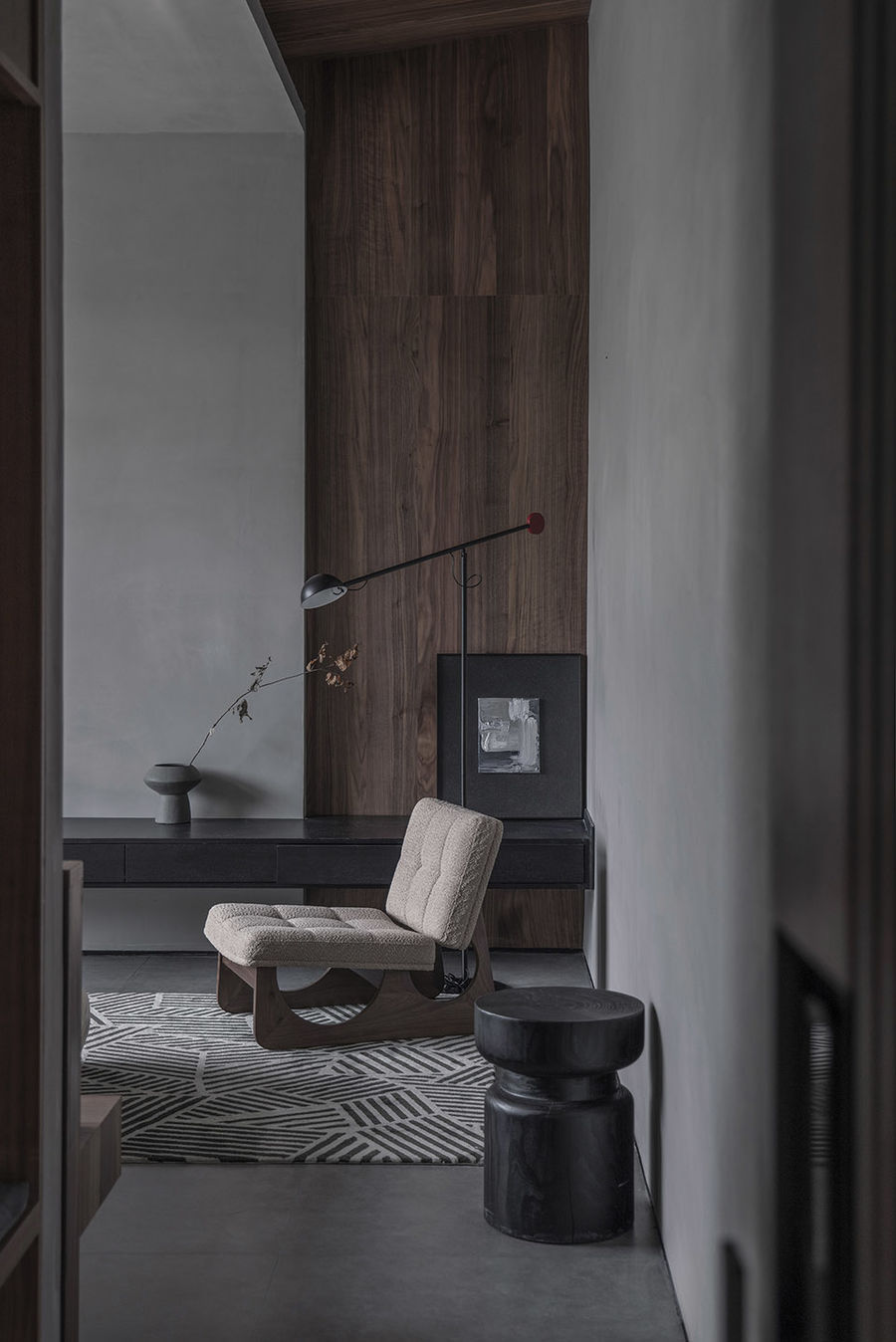
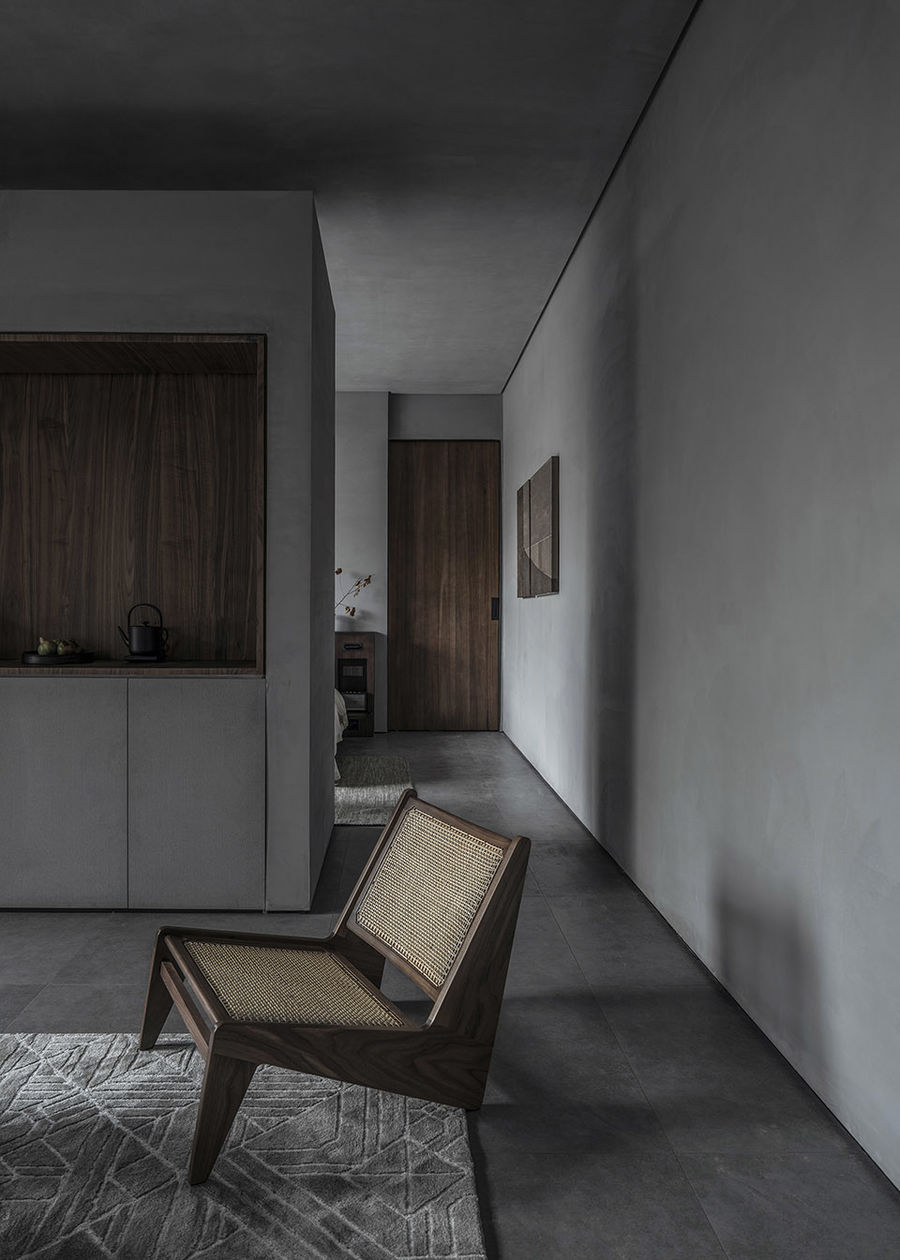
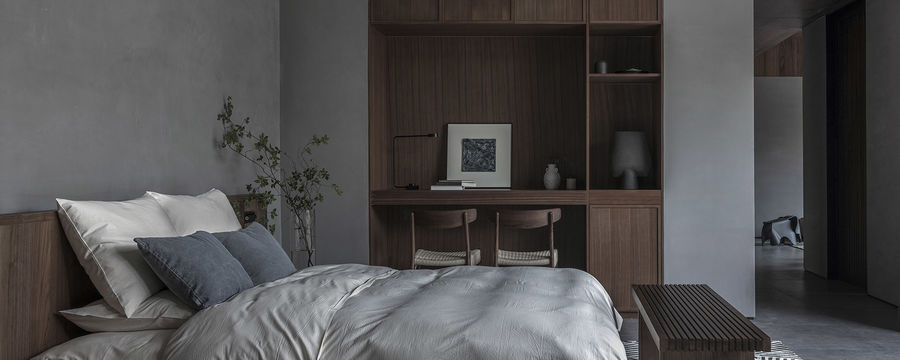
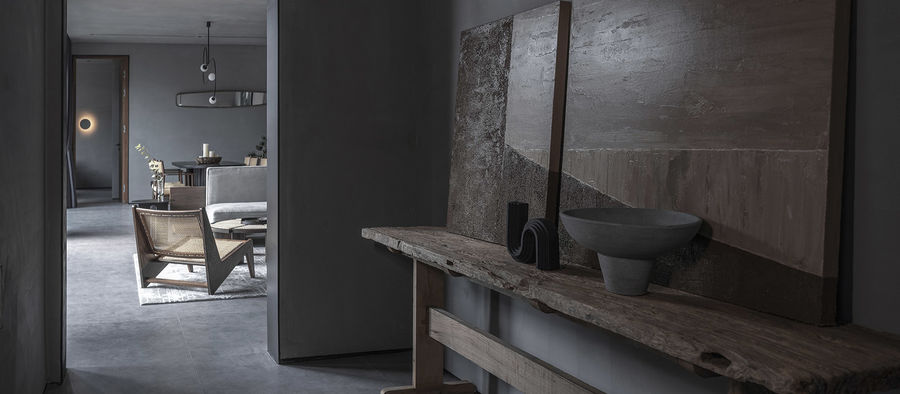
家具在此素凈的空間內(nèi)凸顯。櫥柜的深灰色、臺(tái)面巖板的黑色和灰色混凝土墻面形成素色體系。而沙發(fā)、扶手椅、餐桌等物件則通過(guò)胡桃木和空間形成呼應(yīng)。淺暖色的棉麻和藤編則將柔軟的觸感和自然的韌性加入。空間內(nèi)的瓦罐、枯枝、老木是自然在內(nèi)部的延續(xù),是歲月的沉淀。The furniture is highlighted in this clean space. The dark gray of the cabinets, the black of the countertops and the gray concrete walls form a plain system. The sofas, armchairs, dining tables and other objects echo the space through walnut wood. Light and warm colors of cotton, linen and rattan plaited articles add soft touch and natural toughness. The earthen jars, dead branches and old wood in the space are the continuation of nature and the precipitation of the years.
▼淺暖色的棉麻和藤編則將柔軟的觸感和自然的韌性加入,Light and warm colors of cotton, linen and rattan plaited articles add soft touch and natural toughness ?潘杰
▼院落內(nèi)原有的老榆樹(shù)和建筑的共生,the symbiotic relationship between the existing old elm tree and the
在開(kāi)間及進(jìn)深足夠充裕的情況下,通過(guò)地面高差的處理限定空間,同時(shí)提供更好的觀(guān)景視角。洗手臺(tái)橫向延伸跨越高差,轉(zhuǎn)變?yōu)榘膳_(tái)串聯(lián)空間。金屬格柵形成的床背隔而不擋。鏡面也橫向展開(kāi),由此轉(zhuǎn)變?yōu)橐环h(yuǎn)山畫(huà)卷。In the case of sufficient space and depth, the space is confined by the processing of the height difference, while providing a better viewing perspective. The washbasin extends horizontally turns into a bar counter space. Metal mesh set at the back of the bed separates the space but not blocks the view. The mirror surface also expands horizontally, presenting a picture of distant mountains.
▼客房細(xì)部,details of the guest room ?潘杰
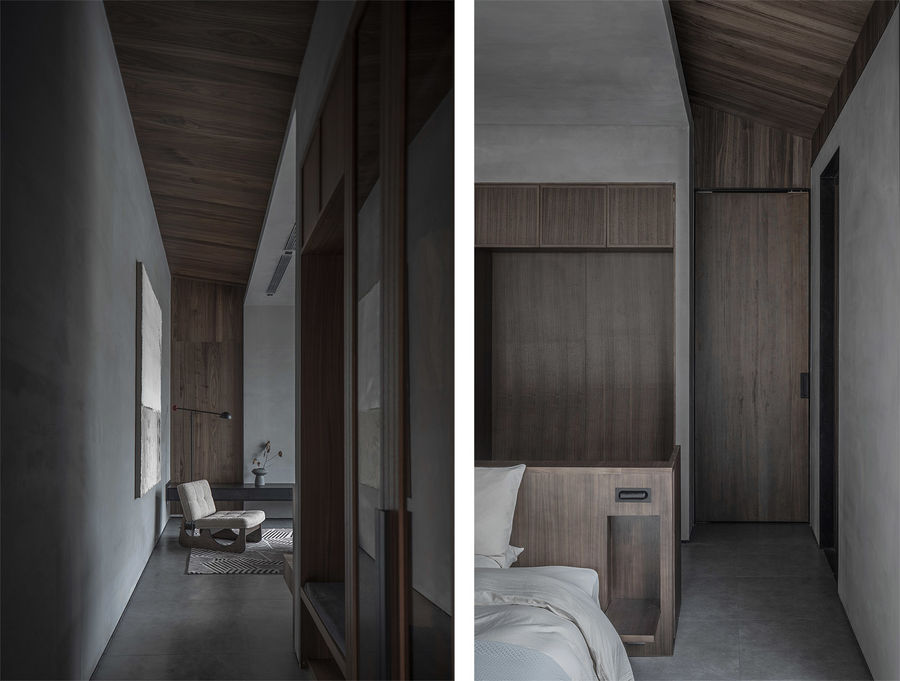
靜謐而有機(jī)–材料和家具
Silent and Organic – Materials and Furniture
以灰色作為主基調(diào)是我們對(duì)空間氛圍的堅(jiān)持。當(dāng)建筑已經(jīng)以毛石的厚重作為整體基調(diào),并完美地融入山體時(shí),我們希望室內(nèi)空間和建筑以及山體都能保持統(tǒng)一,山景、院景、內(nèi)部空間融為一體。同時(shí),深色調(diào)的室內(nèi)方向也保證了和市場(chǎng)上同類(lèi)的度假型客房產(chǎn)品的差異化。It is our pursuit to use gray color to operate the space atmosphere, which is different from other similar resorts. As the building with the heavy rubble is perfectly integrated into the mountain, we hope the interior is also in this way, so that the mountain, courtyard and indoor space are integrated into one.
▼室內(nèi)空間和建筑以及山體都能保持統(tǒng)一, the interior with the heavy rubble ?潘杰
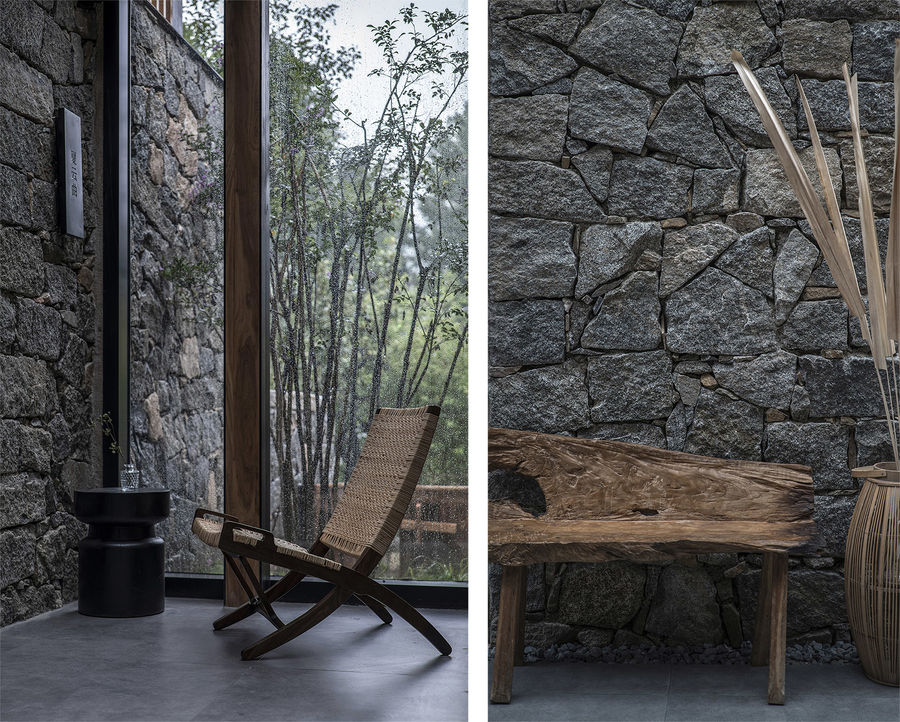
大面的灰色以混凝土肌理呈現(xiàn),富有細(xì)節(jié)的同時(shí)保證整體色調(diào)的純凈。色調(diào)的純凈和幾何形體的純粹相結(jié)合,世俗的繁雜被完全去除,讓人們放慢節(jié)奏,平靜內(nèi)心。在這樣的灰色基調(diào)中,胡桃木帶著木質(zhì)的自然感和舒適感穿插其間,為客房帶來(lái)了合宜的溫度。而木飾面的精致也為空間的品質(zhì)提供了保證。灰色混凝土的收斂結(jié)合胡桃木紋的親人,靜謐而不冷酷。毛石承載著場(chǎng)所的故事成為建筑立面的主材。我們?cè)陂_(kāi)放的公共空間也將其向內(nèi)部延續(xù),內(nèi)和外似乎在通過(guò)毛石和木飾面進(jìn)行對(duì)話(huà),亦或是歷史和當(dāng)下的對(duì)話(huà)。The grey surface is coated with concrete texture, which is rich in details while ensuring the purity of the overall tone. The pure colors and geometric shapes make the visitors feel calm and peaceful. Against such gray tone, walnut wood is interspersed with the natural feeling and comfort of wood, bringing suitable warmth to the guest room. The exquisite wood facing also provides a guarantee for the quality of the space. The convergence of gray concrete combined with the geniality of walnut wood grain makes visitors feel quiet rather than cool. The rubbles carry the story of the place and become the main material of the building facade. We also extend them to the inside in the open public space. And the inside and outside seem to be in dialogue through rubble and wood facing.
▼大面的灰色以混凝土肌理呈現(xiàn),The grey surface is coated with concrete texture ?潘杰
項(xiàng)目名稱(chēng):九女峰 · 故鄉(xiāng)的云山奢酒店
項(xiàng)目位置:山東泰安東西門(mén)村
設(shè)計(jì)單位:gad · line+ studio
主持建筑師/項(xiàng)目主創(chuàng):孟凡浩
專(zhuān)業(yè)負(fù)責(zé):陶濤(建筑)、祝駿(室內(nèi))、李上陽(yáng)(景觀(guān))
設(shè)計(jì)團(tuán)隊(duì):胥昊、黃廣偉、袁棟、李三見(jiàn)、謝宇庭、郝軍、鄧皓、張思思、邱麗珉、金劍波、池曉媚
軟裝陳設(shè):楊鈞設(shè)計(jì)事務(wù)所
建筑面積:2200㎡
設(shè)計(jì)時(shí)間:2019.6-2019.10
建造時(shí)間:2019.10-2020.07
攝影:潘杰、章魚(yú)見(jiàn)筑
Project Name: Jiunvfeng · Cloud of Hometown Resort Hotel
Project Location: Tai’an, Shandong
Design Firm: gad · line+ studio
Chief Architect/Project Leader: Meng Fanhao
Person in Charge: Tao Tao (Architecture), Zhu Jun (Interior), Li Shangyang (Landscape)
Design Team: Xu Hao, Huang Guangwei, Yuan Dong, Li Sanjian, Xie Yuting, Hao Jun, Xu Tianju, Deng Hao, Zhang Sisi, Qiu Limin, Jin Jianbo, Chi Xiaomei
Soft Furnishing: Yang Jun Design Office
Floor Area: 2200㎡
Design Time: 2019/06-2019/10
Construction Time: 2019/10-2020/07
Photographer: Pan Jie, zystudio

更多相關(guān)內(nèi)容推薦
簡(jiǎn)璞設(shè)計(jì) | White inn ▏白居
BDD布道設(shè)計(jì):四季雲(yún)庭酒店 神龍掠影







評(píng)論(0)